Shape & edge detail
Define the welt profile, visible stitching and sole edge to suit the last and the overall silhouette.
A considered build for leather footwear, developed around the shape, feel and finish your collection needs.
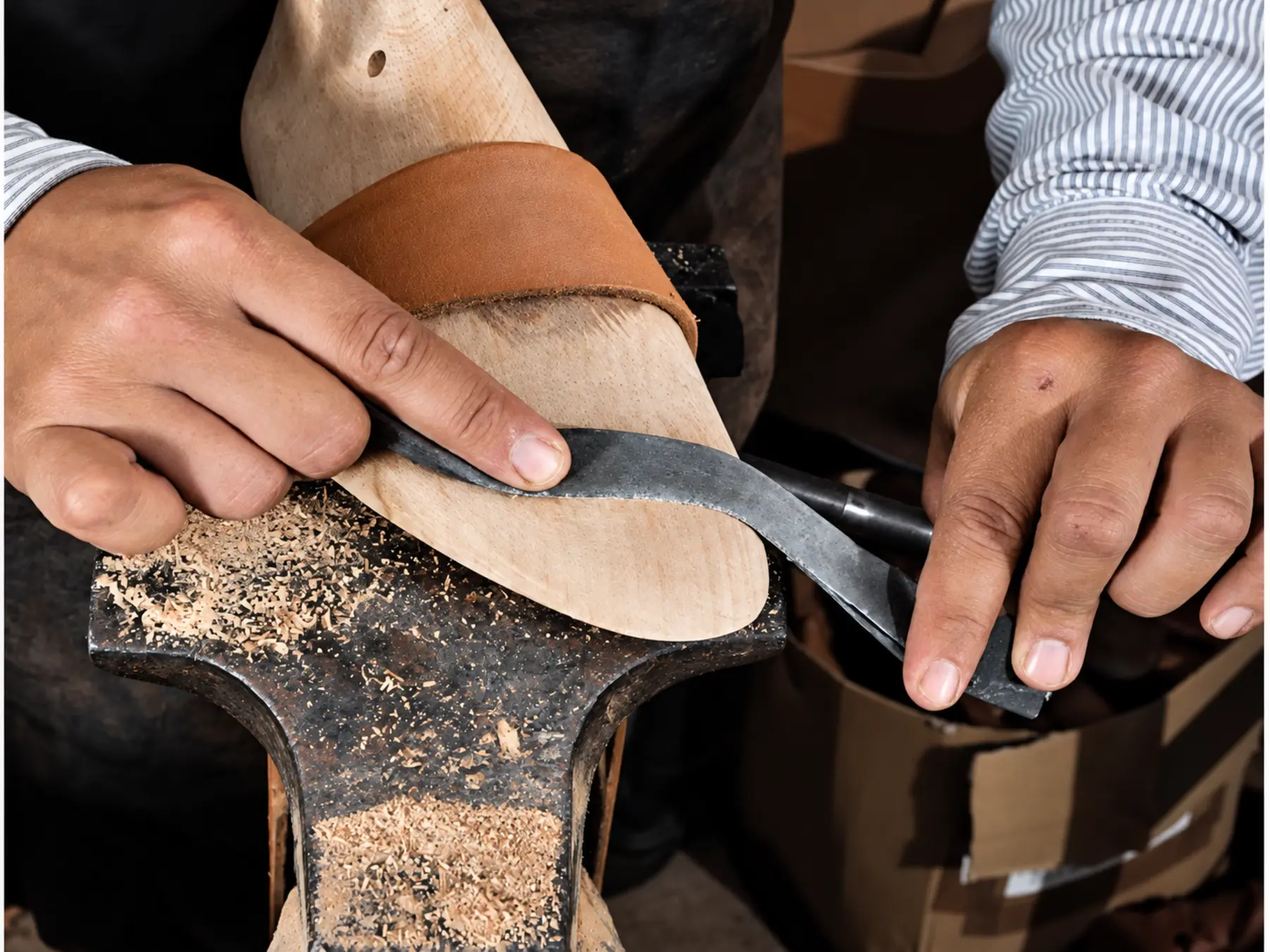
In conventional Goodyear welt construction, a welt connects the upper assembly to the sole through separate stitching stages. This creates a distinctive sole edge and can allow the outsole to be replaced. The finished result depends on the complete specification.
Qineng develops an improved Goodyear direction alongside its vintage footwear. We consider the last, leather, sole profile and finishing together, then review the selected construction on a physical sample.
Define the welt profile, visible stitching and sole edge to suit the last and the overall silhouette.
Review leather, lining, underfoot components and sole flexibility together on the sample.
If resoling is part of your range’s positioning, raise it early so the sole and construction can be reviewed for that requirement.
Share the target customer, reference style, size range and planned quantity.
Discuss the last, upper leather, lining, welt appearance and outsole as one specification.
Check fit, flex, edge shape and the selected stitch layout on the actual shoe.
Confirm the approved sample and agreed changes before production arrangements.
Construction is confirmed for the selected style. Use the sample and agreed specification to establish the actual build of your order.
Discuss both as one project. Leather choice, sole components, shape retention and surface effect are reviewed together on the sample.
Construction alone does not establish a waterproof rating. Any water-resistance requirement and test scope should be agreed for the specific design.
Conventional welted construction can support resoling, but suitability depends on the design and the condition of the shoe. Raise this requirement during development and consult a qualified repairer for worn footwear.
Footwear orders start from 100 pairs. Style, colour and size allocation, sample costs and production timing are confirmed with the quotation.
Share a reference, target market, size range and planned quantity. We’ll discuss the next sampling decisions.